When I started planning my master bathroom renovation last year, everyone told me to stick with light countertops. White marble, they said, would make the space feel larger and brighter. But I’d always been drawn to dramatic, moody interiors, and I couldn’t shake the vision of deep charcoal countertops anchoring my bathroom design. After living with my dark granite countertops for over a year now, I can honestly say that going bold was one of the best decisions I made. Let me share my journey and everything I learned about choosing, installing, and maintaining dark bathroom countertops.
Selecting the Right Dark Stone Material
Choosing the specific material for my dark countertops required more research than I initially expected. I considered absolute black granite, dark soapstone, and even black quartz before making my final decision. Each material had distinct characteristics that would affect both appearance and daily maintenance. I spent weeks visiting stone yards, touching samples, and imagining how different materials would look in my bathroom’s lighting conditions.
I ultimately chose a black granite with subtle gray and silver flecks called Black Galaxy. The metallic specks catch light beautifully and add visual interest without being overly busy or distracting. Pure solid black felt too stark for my taste, while heavily veined materials competed too much with my patterned floor tile. The slight variation in Black Galaxy creates depth and sophistication while maintaining that dramatic dark presence I craved.
The decision between natural stone and engineered quartz was significant. Natural granite offered a unique character and that genuine stone feel I loved, but required sealing and more careful maintenance. Black quartz would have been more practical with its non-porous surface, but I felt it lacked the depth and authenticity of natural stone. After weighing my priorities, I chose granite and committed to proper maintenance routines. The organic beauty and cool touch of natural stone made it worth the extra care for me.
Balancing Dark Countertops with Light Elements
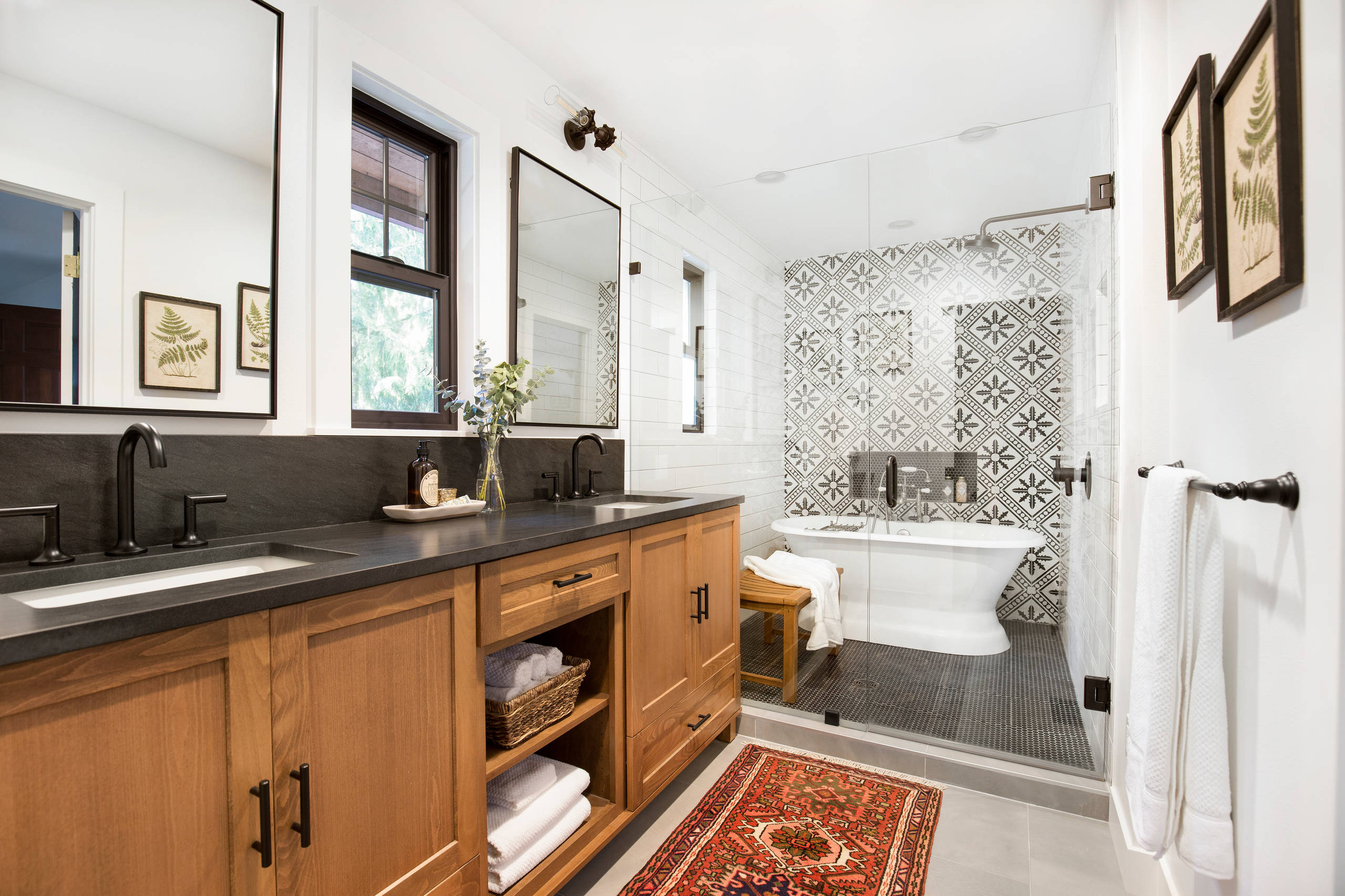
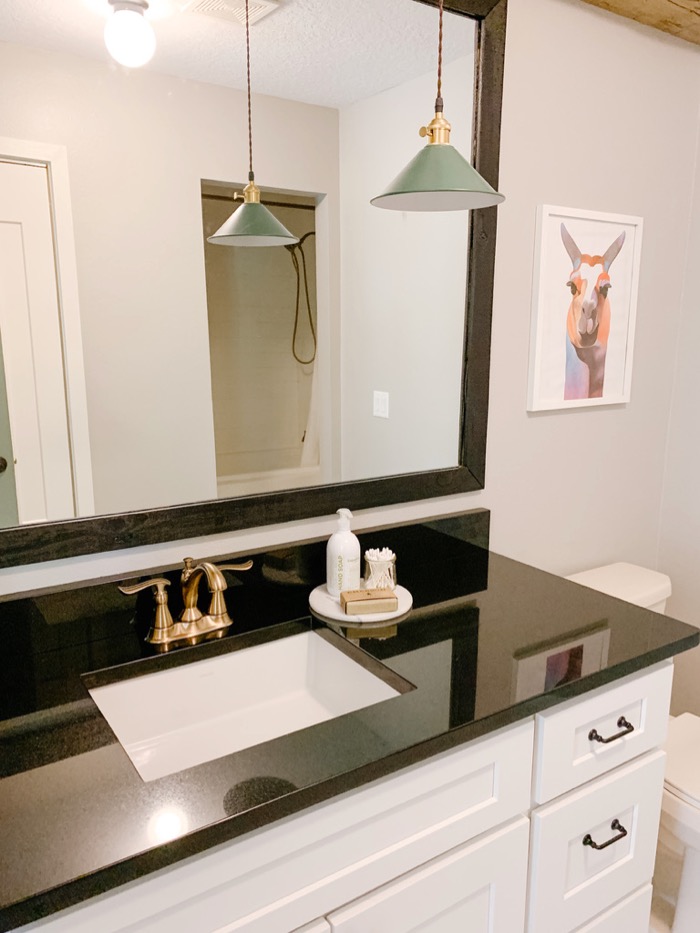
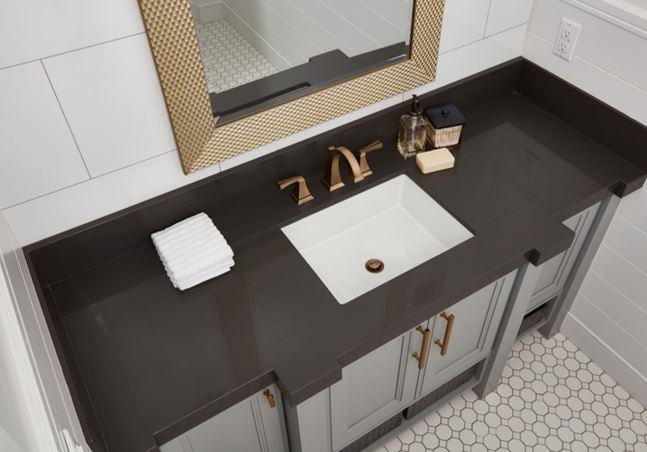
One of my biggest concerns was whether dark countertops would make my bathroom feel cave-like or oppressive. The key to success was creating strategic contrast with lighter elements throughout the space. I paired my black granite with bright white shaker-style vanity cabinets, which creates a stunning visual impact and prevents the darkness from overwhelming the room. The contrast is dramatic but balanced, sophisticated rather than harsh.
Lighting became absolutely critical in making dark countertops work effectively. I installed bright LED lights above the mirror and added recessed lighting throughout the ceiling to ensure adequate illumination. Under-cabinet lighting was a game-changer, creating a beautiful glow that highlights the granite’s metallic flecks while providing practical task lighting for grooming activities. Without proper lighting, dark countertops can absorb light and make spaces feel dim.
I also incorporated reflective surfaces to bounce light around the room and prevent the dark countertops from feeling heavy. A large frameless mirror spans the entire wall above the vanity, while polished chrome fixtures add sparkle and shine. The white subway tile backsplash extends to the ceiling, maximizing brightness and creating vertical lines that draw the eye upward. These thoughtful design choices ensure the dark countertops feel intentional and luxurious rather than gloomy or mistake-prone.

The Water Spot Reality: What Nobody Tells You
Here’s the truth that caught me completely off guard: dark countertops show water spots and soap residue more visibly than light surfaces. Every single drop of water that splashes from the sink leaves a mark on my black granite until it dries or gets wiped away. This was frustrating initially, and I’ll admit there were moments during the first month when I questioned my choice entirely.
However, I’ve developed simple habits that make managing water spots completely manageable. I keep a microfiber cloth in the vanity drawer and do a quick wipe-down after my morning and evening routines. This 30-second habit has become so automatic that I barely think about it anymore. The immediate payoff is that my countertops always look pristine and well-maintained, which actually gives me more satisfaction than ignoring dried water spots on light counters ever did.
I discovered that the right cleaning products make a huge difference in preventing water spots and streaks. I use a granite cleaner specifically formulated for dark stone, which cleans without leaving residue. For daily maintenance, plain water and a microfiber cloth work perfectly fine. I’ve also found that keeping the stone properly sealed helps water bead up and wipe away more easily, rather than soaking in and leaving mineral deposits behind.

Design Styles That Showcase Dark Countertops
Dark bathroom countertops work beautifully in multiple design aesthetics, not just contemporary spaces. In my modern bathroom, the black granite provides sleek sophistication that complements clean lines and minimalist fixtures. The key is pairing dark counters with intentional design elements that create cohesion rather than conflict. I’ve seen dark countertops work equally well in traditional, transitional, and even farmhouse-style bathrooms when styled appropriately.
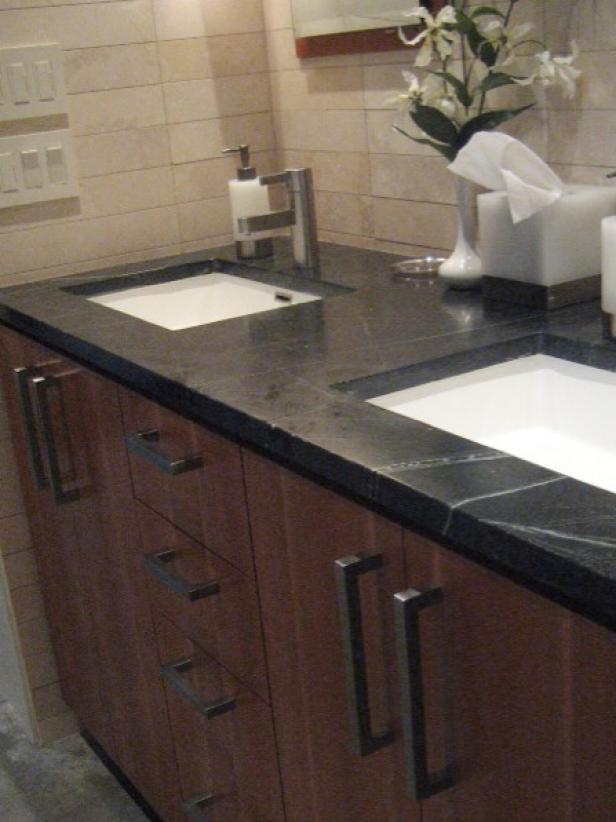
For traditional spaces, dark countertops pair beautifully with rich wood vanities, ornate mirrors, and classic fixtures in oil-rubbed bronze or aged brass. The darkness adds gravitas and timeless elegance without feeling stuffy or dated. I visited a friend’s traditional bathroom with dark soapstone counters against cherry cabinets, and the combination was absolutely stunning. The warmth of the wood balanced the coolness of the stone perfectly.
In farmhouse or rustic bathrooms, dark countertops create a striking contrast against whitewashed or natural wood vanities. The juxtaposition of dark stone with light, textured wood feels organic and grounded. I’ve also seen industrial-style bathrooms where black concrete or slate countertops complement exposed pipes and metal accents brilliantly. The versatility of dark countertops means they adapt to various styles when you consider the overall design vision rather than viewing them in isolation.
Practical Considerations for Daily Use
Living with dark countertops has taught me several practical lessons about daily bathroom use. Toothpaste splatters show up instantly on black granite, as do hairspray overspray and any cosmetic products that miss the sink. This visibility actually encourages better habits. I’m neater and more mindful about cleaning up after myself because messes are immediately obvious rather than hiding on light surfaces.
The durability of my black granite has exceeded expectations. Despite daily use by two people, the surface shows no scratches, chips, or wear after more than a year. Dark stone is remarkably forgiving in terms of hiding minor imperfections that might be more visible on pristine white surfaces. Small scratches or etching that would stand out dramatically on light marble essentially disappear into the dark background of granite.
Temperature is another consideration I didn’t anticipate. Natural stone stays cool to the touch, which feels refreshing during summer but can be chilly in winter. I’ve gotten used to it, but visitors often comment on how cold the countertop feels. This isn’t necessarily negative, just something to be aware of. The cool surface is actually quite pleasant for resting your wrists while doing makeup or shaving on hot mornings.
Cost Analysis and Value Proposition
Dark bathroom countertops span a wide price range depending on material choice and installation complexity. My Black Galaxy granite cost approximately $75 per square foot installed, which fell in the mid-range for natural stone. Basic black granite starts around $50 per square foot, while exotic dark stones like absolute black or dramatic dark quartzites can exceed $150 per square foot. Black quartz alternatives typically range from $60-100 per square foot installed.
The investment felt significant upfront, but I’ve come to view it as money well spent for several reasons. The dramatic impact of dark countertops creates a designer look that makes my entire bathroom feel more luxurious and intentional. Friends and family consistently comment on how striking and sophisticated the space feels. From a resale perspective, dark countertops appeal to buyers seeking contemporary, high-end finishes that stand out from typical builder-grade bathrooms.
Maintenance costs remain minimal with proper care. I spend approximately $30 annually on granite sealer and specialized cleaning products. This is comparable to maintaining any natural stone surface, regardless of color. The durability means I won’t need replacement for decades, making the cost-per-year remarkably reasonable. When amortized over the expected lifespan of 20-30 years, the investment becomes quite modest for the daily enjoyment and visual impact provided.

Do dark bathroom countertops make small bathrooms feel even smaller or more cramped?
This was my concern too! With proper lighting and light-colored walls and cabinets, dark counters actually add depth without shrinking space. My 40-square-foot bathroom feels sophisticated, not small. The key is balancing darkness with brightness elsewhere. Adequate lighting, white or light cabinets, and large mirrors prevent any cramped feeling. Dark counters create visual weight that can actually anchor a space nicely.
How much extra cleaning and maintenance do dark countertops require compared to light ones?
Honestly, they show water spots more but require the same basic maintenance. I wipe mine down twice daily, taking maybe 30 seconds each time. Annual sealing is identical to light granite. The visibility of water spots encourages cleanliness, which I’ve grown to appreciate. If you’re already neat, the adjustment is minimal. Truly, the extra effort is overstated once you develop simple habits.

What’s the best material for dark bathroom countertops in terms of durability and maintenance?
I chose black granite and love its durability and authentic stone character. Black quartz offers a similar look with easier maintenance and no sealing required. Soapstone develops beautiful patina but scratches more easily, though scratches can be sanded out. For the lowest maintenance, choose quartz. For authentic stone character, choose granite. Both are excellent choices depending on your priorities and lifestyle.
Will dark countertops look dated in a few years when design trends change?
Dark stone is actually quite timeless, unlike trendy colors or patterns. Black granite has been used for decades and remains sophisticated. Think of it like a black dress; it’s classic rather than trendy. The key is pairing it with timeless design elements rather than ultra-trendy choices. My black granite will look appropriate for many years, unlike some contemporary trends that quickly feel dated.

Can I use dark countertops with dark cabinets, or is that too much darkness?
I personally wouldn’t recommend it in smaller bathrooms as it could feel heavy. However, in larger bathrooms with excellent lighting, dark-on-dark can look incredibly sophisticated and spa-like. The key is adding plenty of contrast through fixtures, walls, flooring, or accessories. If you love the moody look, ensure you have ample natural and artificial light to prevent the space from feeling oppressive.
Do water spots and soap residue permanently damage dark granite countertops?
No, they’re just cosmetic surface marks that wipe away easily. Proper sealing prevents water and soap from penetrating the stone. Hard water mineral deposits can build up over time if not cleaned regularly, but they’re removable with appropriate cleaners. The spots are temporary and indicate surface moisture, not actual damage. Regular wiping and annual sealing keep dark granite looking perfect indefinitely.
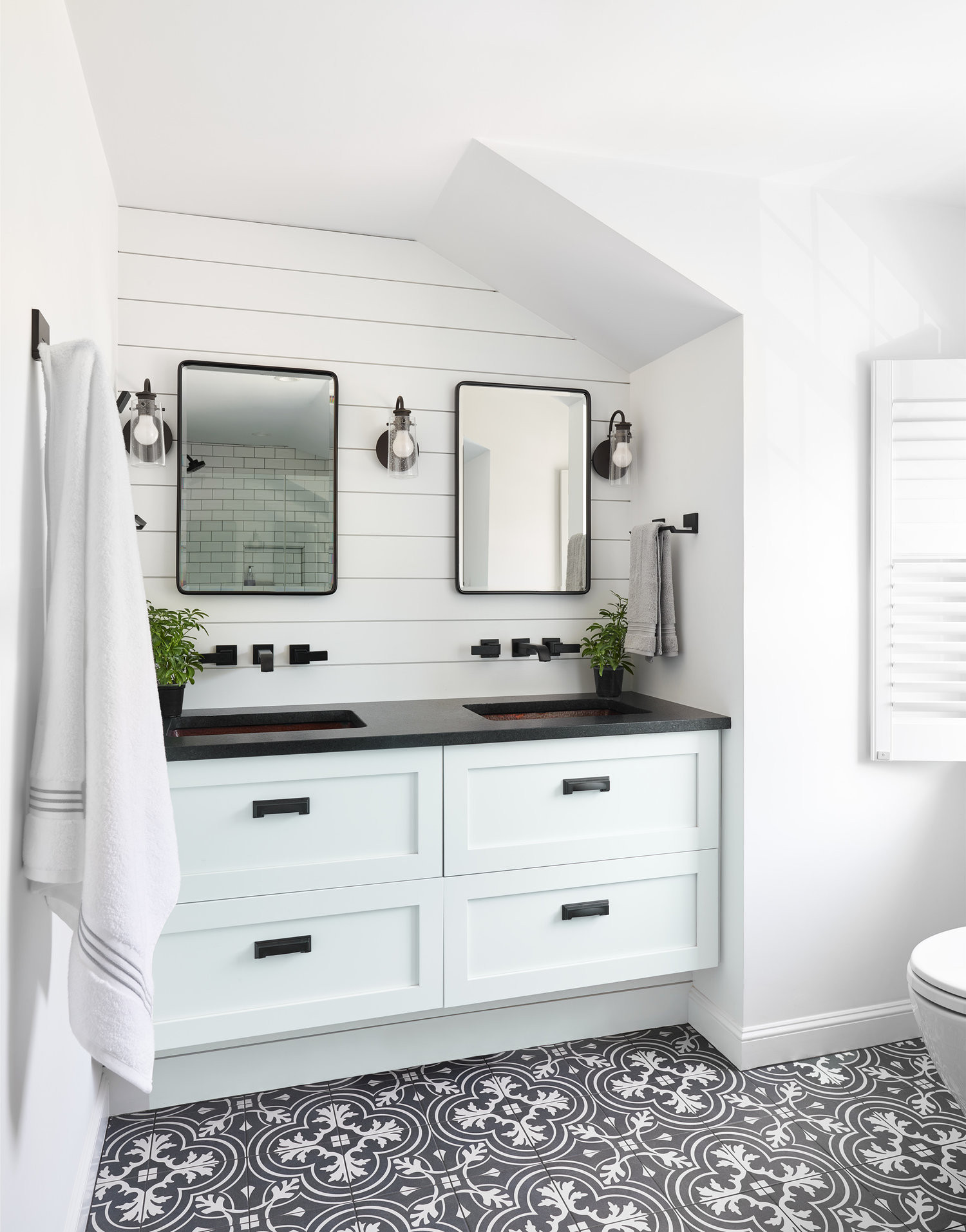
Modern Bathroom Designs with Black Quartz Countertops – Arizona Tile
Related articles:
- Concrete Bathroom Countertop Ideas
- Farmhouse Bathroom Countertops
- Dark Bathroom Countertops
- White Bathroom Countertops
- Concrete Bathroom Countertops DIY
- Onyx Bathroom Countertops
- Bathroom Countertop Remodel
- Inexpensive Bathroom Countertops
- Resin Bathroom Countertops
- Walnut Bathroom Countertop
