When I renovated my 1960s ranch house kitchen, I faced a dilemma that many homeowners encounter: I wanted the authentic look of vintage materials but needed the durability and low maintenance of modern surfaces. My solution came from an unexpected source, retro-styled quartz countertops that perfectly mimicked the terrazzo and speckled laminate popular in mid-century kitchens while offering all the practical benefits of engineered stone. After living with these counters for two years, I’ve discovered they’re the perfect marriage of form and function. Let me share how I found the right retro quartz style, what I learned about colors and patterns, and why this choice has exceeded my expectations in ways I never anticipated.
Discovering Retro-Inspired Quartz Designs
My search for the perfect countertops began with a Pinterest board full of authentic 1950s and 1960s kitchens featuring colorful speckled laminate and terrazzo surfaces. I loved those playful, confetti-like patterns with flecks of contrasting colors against pastel or bold backgrounds. However, I quickly learned that authentic vintage materials presented significant challenges. Original laminate scratches easily and shows wear, while real terrazzo requires professional installation, expensive maintenance, and lacks the stain resistance I needed for daily cooking.
The breakthrough came when my kitchen designer showed me quartz samples specifically designed to capture vintage aesthetics. Manufacturers like Caesarstone, Cambria, and Silestone now produce collections with retro-inspired patterns featuring the speckled, terrazzo-like appearance I craved. I found options with turquoise, pink, yellow, and mint green flecks against cream or white backgrounds, along with bolder patterns incorporating larger chips and more dramatic color contrasts that referenced mid-century design perfectly.
What excited me most was discovering that these retro quartz surfaces weren’t just approximations of vintage looks, they captured the spirit and energy of mid-century design while incorporating modern color science and manufacturing precision. The patterns felt authentic without looking like they were trying too hard. I examined samples next to photos of vintage kitchens and was amazed at how accurately the quartz replicated those classic speckled and terrazzo patterns that defined the era’s optimistic, colorful aesthetic.

Selecting Colors That Capture Mid-Century Magic
Choosing the right color became my most important decision in achieving an authentic retro style. I studied color palettes from the 1950s and 1960s, noting how pastel pinks, mint greens, turquoise blues, and butter yellows dominated kitchen design during those decades. I wanted colors that felt genuinely period-appropriate rather than modern interpretations that might look dated in different ways. The goal was timeless mid-century charm, not trendy retro pastiche.
I ultimately selected a quartz with a soft cream base flecked with turquoise, gold, pink, and gray chips in various sizes. The pattern reminded me of vintage boomerang Formica but with more depth and sophistication. The cream background felt warmer and more inviting than stark white, while the colorful flecks added personality and visual interest without overwhelming my space. I ordered a large sample and lived with it in my kitchen for two weeks, observing how it looked in different lighting conditions throughout the day.
My powder room got a bolder treatment with a quartz featuring a white background and large chips of coral, mint green, and black, creating a more dramatic terrazzo effect. This space could handle a stronger pattern since it’s small and used less frequently than my kitchen. The contrast between my subtle kitchen counters and bold powder room vanity taught me that retro quartz comes in a spectrum from whisper-soft to attention-grabbing, allowing you to calibrate the vintage impact based on each space’s needs and your personal comfort level.
Understanding the Practical Benefits of Quartz
Beyond aesthetics, I needed to understand what made quartz different from natural stone and other countertop materials. Quartz surfaces are engineered stone, typically 90-95% ground natural quartz combined with polymer resins and pigments. This manufacturing process creates surfaces that are harder and more durable than granite or marble while allowing precise control over color and pattern. The consistency appealed to me, as I’d worried about natural stone variations creating unexpected results.
The non-porous nature of quartz became its biggest selling point for my busy kitchen. Unlike marble or granite, quartz never needs sealing because the resin binds the material completely, preventing liquids from penetrating the surface. I can leave a glass of red wine or a plate of tomatoes on my counters without anxiety about staining. Coffee, turmeric, beet juice, and other notoriously problematic substances wipe away easily with just soap and water, which has made kitchen cleanup significantly faster and less stressful.
Scratch and heat resistance gave me additional peace of mind. While quartz isn’t indestructible, it resists scratches from knives and daily use far better than laminate or softer stones. I always use cutting boards out of habit, but accidental knife contact hasn’t left visible marks. The heat resistance isn’t quite as robust as natural stone; manufacturers recommend using trivets for hot pots over 300 degrees Fahrenheit, but I’ve placed warm cookware directly on the surface many times without damage. These practical benefits let me enjoy my retro aesthetic without vintage materials’ typical vulnerabilities.

Working with Fabricators and Installation
Finding a fabricator experienced with retro quartz patterns proved more important than I’d anticipated. Some fabricators primarily work with traditional granite and marble, viewing quartz as a lesser material or treating all quartz identically. I needed someone who understood that pattern direction and seam placement mattered significantly for achieving the right vintage look. I interviewed three fabricators before finding one who got excited about my retro vision and offered thoughtful suggestions about layout.
The templating process allowed me to see exactly how my chosen quartz would lay out across my kitchen. My fabricator brought a full slab to my house, and we experimented with positioning to ensure the speckled pattern was distributed evenly across the island and perimeter counters. With retro patterns featuring random flecks and chips, I wanted to avoid concentrating all the colorful elements in one area while leaving other sections looking plain. We marked the slab with tape to indicate cuts and tested different orientations until everything looked balanced.
Installation day went smoothly thanks to thorough planning. The fabricators arrived with my countertops pre-cut and polished, ready to install. The process took about four hours for my kitchen, including setting the pieces, joining seams with color-matched epoxy, and installing my undermount sink. The seams were nearly invisible thanks to the busy retro pattern, which naturally disguised the joints far better than solid-color quartz would have. I could use my counters immediately after installation, unlike natural stone, which needs time forthe sealant to cure, which was a practical advantage I hadn’t fully appreciated until experiencing it.

Styling Your Kitchen Around Retro Quartz
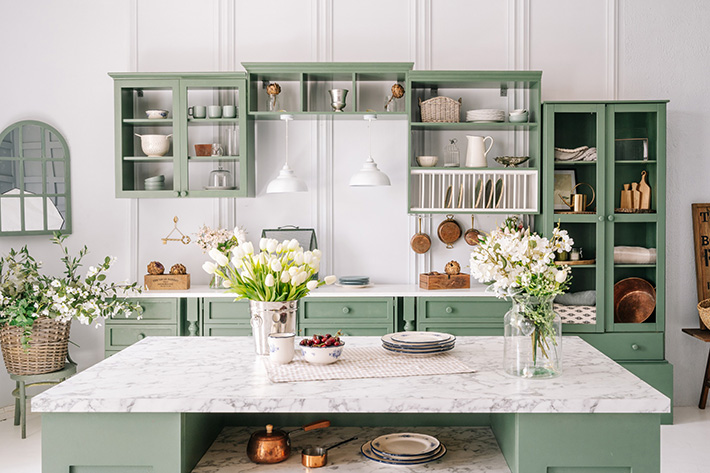
Once my counters were installed, I needed to style the rest of my kitchen to complement rather than compete with the playful retro pattern. I initially worried that adding other vintage elements might create visual chaos, but I learned that thoughtful coordination creates cohesive mid-century charm. I painted my cabinets a soft sage green that picked up the turquoise flecks in my quartz, creating a connection between surfaces while keeping the overall palette calm and sophisticated.
My backsplash choice became crucial to the kitchen’s success. I considered continuing the retro theme with colorful tile, but ultimately chose simple white subway tile in a classic running bond pattern. This decision let my countertops be the star while providing clean, bright surfaces that made my small kitchen feel larger. The white tile also created breathing room between the patterned counters and my other vintage-inspired elements, like my chrome faucet, retro-style refrigerator, and mid-century pendant lights.
I discovered that retro quartz counters work surprisingly well with mixed eras and styles. My kitchen combines 1960s-inspired counters with farmhouse elements like open shelving and a porcelain sink, plus contemporary stainless steel appliances, and everything works together beautifully. The key is maintaining consistent warmth or coolness in your color palette and not overthinking perfect period accuracy. My kitchen feels personal and collected rather than like a museum recreation, which is exactly what I wanted. The retro counters provide vintage personality while remaining versatile enough to adapt as my style evolves.

Living with Retro Quartz Day-to-Day
Two years into living with my retro quartz counters, I can honestly say they’ve exceeded my expectations for both appearance and performance. Daily maintenance is absurdly simple, I wipe them with a damp microfiber cloth and mild dish soap, and they look perfect. Tougher messes like dried pasta sauce or sticky honey come off with a little warm water and gentle scrubbing. I’ve never needed special cleaners or treatments, which saves money and reduces the chemical products in my home.
The durability has impressed me repeatedly. I’m not always as careful as I should be, and my counters have withstood dropped jars, dragged small appliances, and countless meal preparation sessions without showing damage. The surface still looks as flawless as on installation day, with no visible scratches, stains, or dull spots. Friends with marble or butcher block counters often complain about maintenance and visible wear, while I silently appreciate how forgiving and resilient my quartz surfaces are.
Perhaps my favorite unexpected benefit is how the retro pattern disguises everyday mess. Crumbs, water spots, and light debris don’t show dramatically against the speckled background the way they would on solid black or white counters. This means my kitchen looks cleaner between thorough wipings, which reduces stress and makes me feel less compelled to constantly fuss over the surfaces. The busy pattern that initially seemed purely aesthetic turned out to have this wonderful practical advantage that makes daily living more pleasant and relaxed.

How much do retro-styled quartz countertops typically cost?
My retro quartz counters cost about $85 per square foot installed, which included materials, fabrication, edge profile, sink cutout, and installation. Prices vary by brand and pattern complexity, ranging from $60 to $120 per square foot, typically. My total kitchen renovation with 55 square feet of counter space came to roughly $4,700. This falls in the mid-to-upper range for countertop materials, more than laminate but comparable to granite and less than premium marble or quartzite.
Do retro quartz patterns look dated or will they remain stylish?
I worried about this initially, but mid-century design has proven remarkably enduring. The retro patterns reference designs from 60+ years ago that still feel fresh and appealing. I think thoughtfully chosen retro quartz ages better than trendy solid colors or ultra-modern patterns. The key is selecting colors and patterns you genuinely love rather than following current trends. My counters feel timeless because they reference an established design era rather than chasing contemporary fads.

Can I place hot pots and pans directly on quartz countertops?
Manufacturers recommend using trivets for anything over 300 degrees Fahrenheit, as extreme heat can damage the resin binders in quartz. I use trivets for pots straight off the stove or from the oven as a precaution. However, I’ve placed warm cookware directly on my counters many times without issues. The heat resistance is good, but not as robust as natural stone. Using trivets is a small habit that protects your investment without significantly impacting daily cooking workflow.
How do I clean and maintain retro quartz counters?
Daily cleaning requires only warm water and mild dish soap with a soft cloth or sponge. I avoid abrasive scrubbers and harsh chemicals like bleach, which can dull the surface over time. For stuck-on messes, I use a plastic scraper and warm water. Quartz never needs sealing or special treatments, which is wonderfully convenient. I deep-clean monthly with diluted glass cleaner to restore extra shine. It’s honestly the easiest countertop material I’ve ever maintained, requiring minimal effort.
Will the retro pattern work with different cabinet colors and styles?
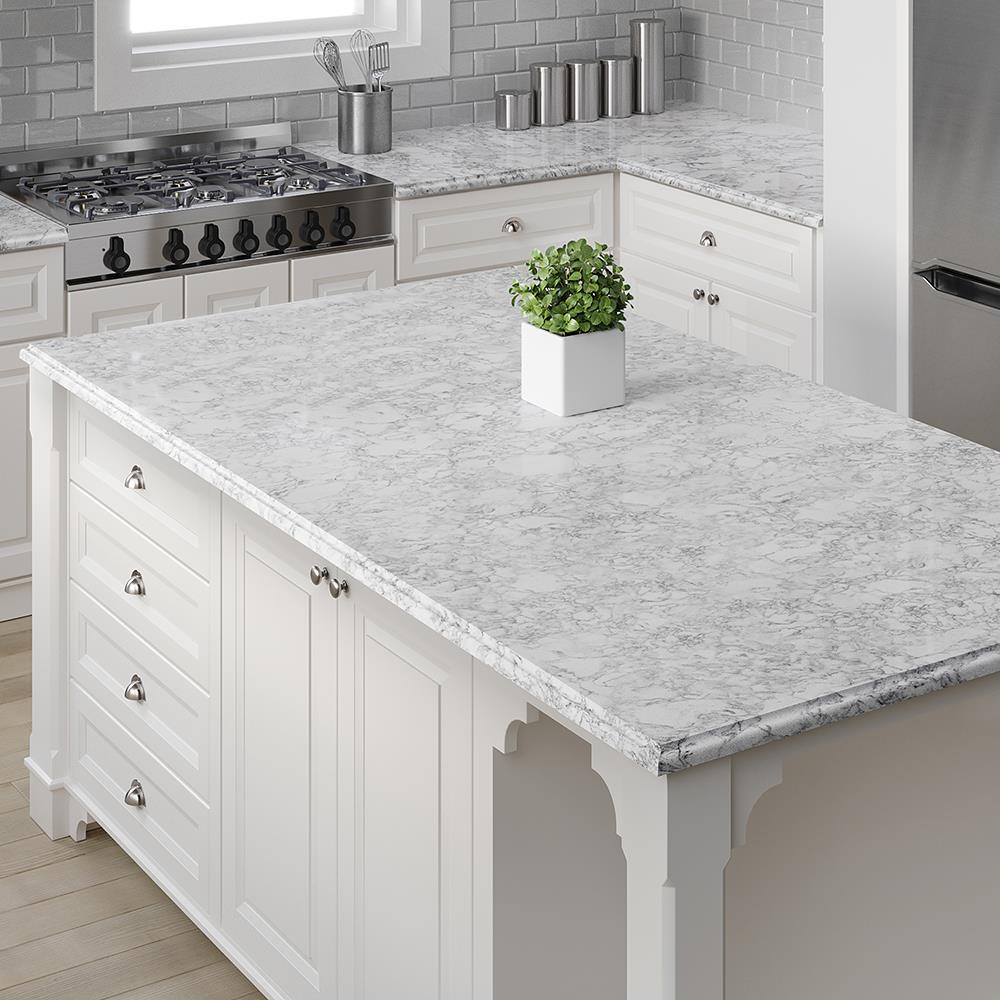
Absolutely. My retro quartz works beautifully with my sage green cabinets, but I’ve seen similar patterns paired successfully with white, navy, natural wood, and even black cabinets. The multi-colored flecks in most retro patterns contain enough variety to coordinate with numerous cabinet colors. I’d recommend getting large samples and viewing them against your actual cabinets in your space’s lighting. The busy pattern is surprisingly versatile and forgiving with different styles and color combinations.
Are there different edge profiles available for retro quartz?
Yes, though I chose a simple, eased edge that felt appropriately mid-century modern. Quartz can be fabricated with various edge profiles, including beveled, bullnose, waterfall, and ogee edges. I avoided overly ornate edges that would conflict with my retro aesthetic. Most mid-century kitchens featured simple, clean-lined edges, so I kept mine straightforward. The edge profile impacts both appearance and cost, with more complex edges adding $10-30 per linear foot. Choose edges that complement your overall design vision.

Related articles:
- Farmhouse Quartz Countertops
- Retro Quartz Countertops
- Modern Quartz Countertops
- Vanity With Quartz Countertop
- Caesarstone Quartz Countertops
- Quartz Countertops Cleaning
- Quartz Countertops Tile Backsplash
- Beveled Edge Quartz Countertop
- Quartz Countertop Choices
- Quartz Countertop Types
