When I started planning my master bathroom renovation two years ago, I was torn between marble, granite, and quartz for my vanity countertop. After living with a beautiful Carrara marble vanity in my previous home that required constant maintenance and showed every water spot, I decided to take a chance on quartz despite never having experienced it firsthand. That decision turned out to be one of the best choices I made during the entire renovation process. The combination of durability, beauty, and virtually zero maintenance has exceeded every expectation, transforming my daily routine into something I actually look forward to rather than dread.
Choosing the Right Quartz Pattern and Color
Pattern selection overwhelmed me initially when I visited the showroom and saw hundreds of quartz slabs displaying everything from subtle speckles to dramatic veining. I spent three different visits studying samples under various lighting conditions before settling on a soft white background with delicate gray veining that mimics natural marble. The key breakthrough came when I took samples home and lived with them for a week, observing how they looked under my bathroom’s actual lighting throughout different times of day and weather conditions.
Color coordination with my existing bathroom elements required careful consideration beyond just what looked pretty in isolation. I learned that quartz appears different under LED versus incandescent lighting, and what seemed perfect under showroom fluorescents looked completely wrong in my naturally lit bathroom. My final choice of Calacatta-inspired quartz perfectly complemented my white cabinetry while providing enough contrast to define the vanity space without overwhelming the room’s other design elements.
Thickness decisions impacted both appearance and cost more than I initially realized when comparing standard 2cm versus premium 3cm slabs. The thicker material not only looks more substantial and luxurious but also provides better structural support for undermount sinks and reduces the risk of cracking around cutouts. After handling both options during my selection process, I chose 3cm thickness despite the additional cost because the enhanced durability and appearance justified the investment for a long-term installation.

Installation Process and Professional Requirements
Template creation proved more complex than I expected when the fabricator measured my space for the custom vanity top. They created a precise cardboard template that accounted for every wall irregularity, plumbing fixture location, and cabinet dimension variation that I hadn’t noticed. I learned that even minor measurement errors can result in expensive rework, so the template process takes several hours and requires removing existing countertops to ensure accuracy for the final installation.
Fabrication timing surprised me with its precision requirements, as my quartz countertop was cut and polished to exact specifications in the fabricator’s shop using specialized diamond-blade tools. The process took five days from template to completion, during which any changes or modifications would have required starting over completely. I appreciated the fabricator’s detailed photos showing progress and quality control checks that ensured perfect cutouts for my vessel sink and faucet configuration.
Installation day required careful coordination between multiple trades to ensure everything aligned perfectly for the final mounting. The countertop arrived in two pieces due to my vanity’s L-shaped configuration, and the seaming process demanded precise alignment that would be invisible once complete. I watched the installers use specialized adhesives and clamping systems to create joints so tight that I still can’t identify the seam location after two years of daily use.
Comparing Costs: Quartz vs. Other Countertop Materials
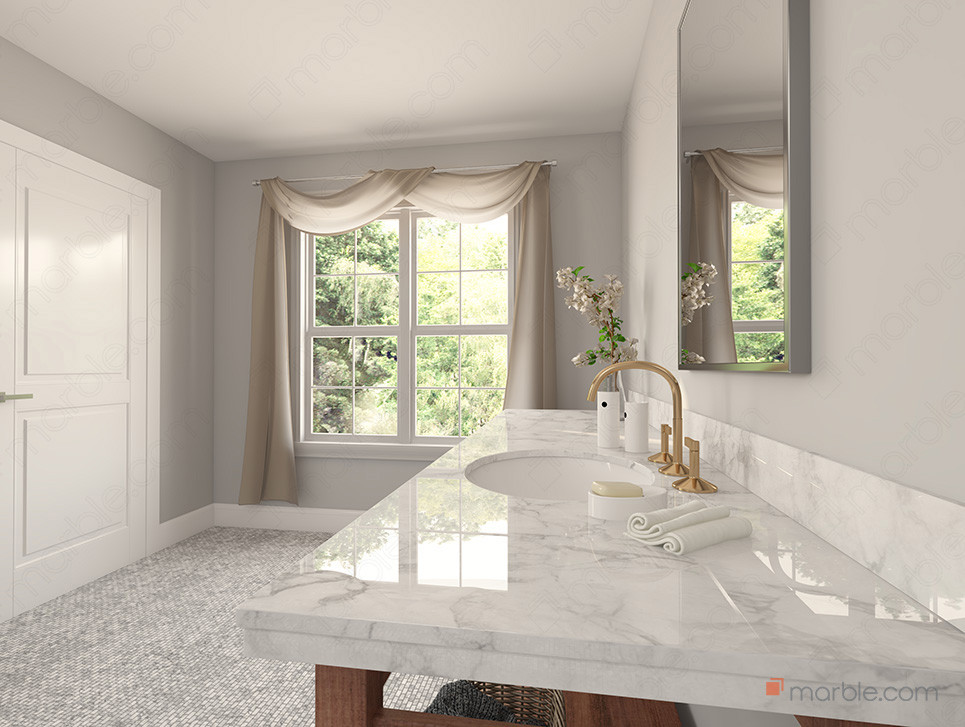
Material pricing revealed that quartz sits in the middle range between budget laminates and premium natural stones, offering excellent value for the performance characteristics. My fabricator quoted $65 per square foot installed for mid-range quartz, compared to $45 for granite and $85 for premium marble. When I factored in the long-term maintenance costs and potential replacement needs for softer materials, quartz became the most economical choice over the vanity’s expected lifespan.
Installation costs remained consistent across different stone materials since the fabrication and mounting processes are essentially identical regardless of whether you choose granite, marble, or quartz. Labor costs accounted for about 40% of my total project expense, including template creation, fabrication, delivery, and installation. I learned that choosing a reputable fabricator with proper insurance and warranties was worth paying slightly higher rates to ensure quality workmanship and protection against potential issues.
Long-term value considerations made quartz the clear winner when I calculated total ownership costs over ten years of typical use. While the initial investment was higher than some alternatives, the elimination of sealing requirements, stain resistance, and scratch durability meant no ongoing maintenance expenses. I estimated saving $300-500 over a decade compared to natural stone alternatives that require periodic sealing and professional refinishing to maintain their appearance.

Daily Maintenance and Care Requirements
Cleaning routines became incredibly simple compared to my previous marble countertop that required special cleaners and constant vigilance against acidic substances. I use standard glass cleaner or mild soap and water for daily cleaning, and even harsh bathroom cleaners haven’t caused any damage or dulling after two years of regular use. The non-porous surface means spills can’t penetrate and stain, eliminating the anxiety I felt with natural stone about immediate cleanup requirements.
Stain resistance exceeded every promise made during the sales process, surviving challenges that would have permanently damaged my previous marble countertop. Coffee, wine, makeup, hair dye, and even nail polish remover clean up completely without leaving traces or requiring special treatment. I’ve accidentally left spills overnight that would have required professional restoration on natural stone, yet my quartz surface cleaned up perfectly the next morning with just soap and water.
Scratch resistance proved excellent for normal bathroom use, though I learned that quartz isn’t completely indestructible under extreme conditions. Normal daily activities like placing bottles, jewelry, and toiletries cause no visible wear, but I did create a small scratch by accidentally dragging a metal cosmetic compact across the surface. The scratch is barely visible and doesn’t affect function, but it reminded me that even durable materials require reasonable care.
Design Integration with Vanity Styles
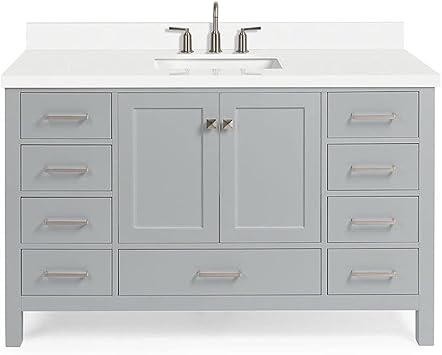
Modern vanity styles showcase quartz countertops beautifully, particularly floating designs that emphasize the material’s clean lines and consistent patterns. My wall-mounted vanity with integrated quartz top creates a seamless, minimalist appearance that makes my bathroom feel larger and more contemporary. The material’s engineered consistency works perfectly with modern design principles that emphasize clean geometry and uninterrupted surfaces.
Traditional bathroom designs benefit from quartz patterns that mimic natural stone while providing superior performance characteristics. I helped my neighbor choose a quartz with subtle veining and warm undertones that complemented her traditional raised-panel vanity perfectly. The key was selecting patterns with enough natural variation to avoid the obviously artificial look while maintaining the reliability and low maintenance that makes quartz practical for busy families.
Transitional styles offer the most flexibility for quartz integration, allowing patterns that bridge contemporary performance with classical aesthetics. My own vanity falls into this category, combining modern functionality with timeless appeal through careful pattern selection. The versatility of available quartz patterns means finding options that work with virtually any design style while delivering consistent performance benefits.

Addressing Common Concerns and Limitations
Heat resistance limitations require some awareness, though normal bathroom use rarely approaches temperatures that could damage quartz surfaces. Hair styling tools and curling irons can potentially cause damage if left directly on the surface, so I use heat-resistant mats for protection. Unlike granite, which handles high temperatures naturally, quartz contains polymer resins that can be damaged by extreme heat, making reasonable precautions necessary for long-term preservation.
Repair possibilities are limited compared to natural stone, which can be refinished and restored through professional intervention. Quartz damage typically requires replacement of the affected section or entire piece, making prevention the best strategy. However, the material’s durability means damage is unlikely under normal use conditions, and my fabricator’s warranty covers manufacturing defects for ten years, providing peace of mind for significant investments.
Cost considerations make quartz a middle-ground option that balances performance with budget constraints effectively. While more expensive than basic materials like laminate or tile, the long-term value proposition justifies the investment through eliminated maintenance costs and superior durability. I view my quartz vanity top as a long-term investment that will maintain its appearance and function throughout multiple design updates to other bathroom elements.
How does quartz compare to granite for bathroom vanity countertops?
Quartz outperforms granite in bathrooms due to its non-porous surface that resists stains and bacteria without sealing requirements. I chose quartz over granite specifically for the maintenance benefits. Granite needs annual sealing and can stain from common bathroom products. Quartz costs slightly more initially but saves money long-term through eliminated maintenance.
Can I install a quartz countertop myself or do I need professionals?
Professional installation is essential due to the weight, precision cutting requirements, and specialized tools needed. My 6-foot vanity top weighed over 200 pounds and required exact measurements for sink and faucet cutouts. DIY installation risks expensive damage to the material and potential injury. Professional fabrication and installation typically includes warranties for peace of mind.

What thickness should I choose for my bathroom vanity countertop?
I chose 3cm thickness over 2cm for better durability and appearance, especially with undermount sinks. The thicker material looks more substantial and provides better support around cutouts. While 2cm costs less, the enhanced performance and premium appearance of 3cm justified the extra expense for a long-term installation in my master bathroom.
How do I clean and maintain my quartz vanity countertop?
Daily cleaning requires only soap and water or standard glass cleaners. I’ve used harsh bathroom cleaners without damage, though mild products work fine. The non-porous surface resists stains and bacteria naturally. Avoid abrasive scrubbing pads and use trivets for very hot items. No sealing or special treatments are needed, unlike natural stone alternatives.

Are there any disadvantages to choosing quartz for bathroom vanities?
Heat sensitivity from styling tools requires reasonable precautions, and repair options are limited compared to natural stone. The consistent patterns may look artificial to those preferring natural stone variations. Initial cost exceeds basic materials like laminate. However, these limitations are minor compared to the durability and maintenance benefits I’ve experienced over two years.
How long will a quartz bathroom countertop last?
Manufacturers typically warrant quartz for 10-15 years, but the material should last much longer with proper care. My fabricator expects 20+ years of service life in residential bathrooms. The non-porous surface doesn’t degrade like natural stone, and the consistent coloring means no fading or patina development. Proper installation and reasonable care should provide decades of reliable service.

The Best Countertop for Bathroom Vanities Daltile
Related articles:
- Farmhouse Quartz Countertops
- Retro Quartz Countertops
- Modern Quartz Countertops
- Vanity With Quartz Countertop
- Caesarstone Quartz Countertops
- Quartz Countertops Cleaning
- Quartz Countertops Tile Backsplash
- Beveled Edge Quartz Countertop
- Quartz Countertop Choices
- Quartz Countertop Types
